| |

| |
Newsletter September 2026 | |
|
Dear Subscriber, Furthermore, you will be able to find news about the Real4Reg Final Symposium taking place on 3-4 November (Lisbon, Portugal), including the agenda and registration details, the RWD training modules developed that are now partially available, the currently open survey “Appraisal of Target Trial Emulation (TTE) Studies in Research, Regulatory Affairs and Health Technology Assessment”, and Real4Reg’s participation in the 42nd ISPE Annual Meeting. At the end, you will be able to stay up to date on upcoming
events. | |
Introducing the Real4Reg Real-World Data Training ModulesTraditionally, the safety and effectiveness of medicines are evaluated using the results of randomised clinical trials (RCTs) as evidence. Strengthening the use of real-world evidence (RWE) broadens the evidence on which decisions are made in regulation and health technology assessment (HTA), makes use of the increasing amount of health data available, and can accelerate decision-making. RWE is established in the post-authorisation phase of medicines, whereas it is only slowly gaining ground in the pre-authorisation and evaluation phase. The interpretation of RWE has different requirements compared to RCTs, making it a necessity to train stakeholders to enable them to incorporate RWE in their decision-making. The demand for such training was demonstrated in Real4Reg’s publication “Key Stakeholders’ Knowledge, Opinions, and Interests on Real-World Evidence in the Regulatory Process – Results of an EU-Wide Survey”. Therefore, the expertise, results, and lessons learnt over the course of Real4Reg were channelled into the development of a training concept on data-driven decision-making. The Real4Reg training program is intended for all stakeholders involved in regulatory decision-making, including regulators, HTA bodies, payers, academia, industry, and patients. Due to the diverse target audience, a modular structure of the training was chosen, which allows training participants to select content relevant to them. It consists of four modules divided into several submodules. The modules build on each other; knowledge is acquired progressively.
| |
Related Initiative – European Health Data Space (EHDS)Introducing the EHDSThe EHDS is an initiative proposed by the European Commission (EC) in 2022. The purpose is to ultimately allow the use and exchange of health data contained in electronic health record (EHR) systems in the European Union (EU). Currently, each country has its own rules regarding health data access. The EHDS aims to create a more unified, coordinated, and efficient framework, while preserving patients’ privacy and security. EHDS will allow health data access for both primary and secondary uses. To ensure a smooth transition and establishment, five milestones have been proposed. The first one, the publication of the EHDS regulation in the Official Journal of the EU, establishing the goals and standards, was achieved in March 2025. Four milestones are established to be completed in the upcoming years:
Primary Use of Health DataPrimary use of health data refers to the use of health data for the provision of healthcare services, including the diagnosis, treatment, and care of individual patients. Since the digitalisation and internal interoperability have different achievement rates in the Member States, EHDS wants to ensure that all of them update their practices and implement the appropriate measures to enter this new paradigm. Within this scope, the EHDS will greatly benefit patients since there will be a facilitated access and ability to share their health data with healthcare professionals, make alterations to the information available and restrict access, and ask an expert’s opinion from a different Member State. For healthcare professionals, accessing patients’ health data will be much faster and easier, contributing to better diagnosis and choosing of treatments. Secondary Use of Health DataSecondary use of health data means exploiting it for the general interests of the community, such as research, public health monitoring or policy-making. Currently, the studies that support these practices are sometimes done by using small databases, which restricts the sample size and representativeness. Therefore, EHDS intends to connect all Member States, by allowing the access and exchange of health data among them. In this sense, the categories that should be available include: data from EHRs, determinants of health (socioeconomic, behavioural…), genomic data, data on pathogens affecting humans, mortality registries, among others. To access health data, stakeholders must submit an application detailing the purpose, expected impact, duration of the analysis, privacy safeguards, and the need for anonymised or pseudonymised data. Health Data Access Bodies (HDABs) review the request and, if the required conditions are met, a data permit is issued. On the other hand, the health data request can be made to simply obtain a statistical response in an anonymised format, with less stringent application conditions. Regarding secondary use, EHDS will benefit, not only patients and healthcare professionals just like in primary use, but also researchers, policy makers, and industry representatives. For the first group, it will benefit them in the long run due to the discovery of newer and more effective treatments. In addition, patients will have more control over their health data, being able to know who accessed and for what purpose. For researchers, the access will be easier, allowing availability and quality to be rapidly checked, which will facilitate rare diseases studies. On the other hand, for policy makers the greatest advantage will be the strengthening of regulatory decisions, since there will be much more evidence to support them. Finally, for industry representatives the EHDS will represent a cost-efficient way to obtain quality health data, that will boost innovation and scientific progress, especially when combined with technologies like artificial intelligence. Health Data Privacy and Protection in Secondary UseThe privacy and protection of patients’ health data will be ensured by various means. Firstly, the access will be restricted to specific people and institutions, according to HDABs decisions. In addition, the principle of data minimisation will be followed and protection techniques, like anonymisation or pseudonymisation, will be implemented. Secondly, working in secure processing environments (e.g. inability to download patient's health data) and complying with existing guidelines (e.g. General Data Protection Regulation) will also contribute to the preservation of health data privacy and security. Thirdly, there will be limitations in regards to the purposes for which the information can be accessed and used. For example, processing health data for advertising or marketing purposes, to make decisions that discriminate certain groups of people in regards to goods or services (e.g. job offers) or to develop harmful products or services will be completely prohibited. Finally, one of the most crucial requirements is the opt-out right which consists of patients refusing to share their health data with other Member States and/or its exploitation for secondary uses. This right can be exercised at any time and without associated explanations. It is reversible and should be easy to understand and perform. EHDS Expected ImpactsAccording to the EC, the EHDS implementation is expected to completely transform healthcare: EHDS will allow savings of billions of euros, enhance healthcare delivery, support decision-making and foster research and innovation, reaching a broad range of stakeholders. References
| |
News | |
Real4Reg Final SymposiumOn 3-4 November 2026, Real4Reg will have its Final Symposium, where the project’s results, lessons learnt, and insights on how RWD can support and strengthen regulatory and HTA decision-making will be addressed. The event will be hosted by INFARMED, I.P. in Lisbon, Portugal, and online. Over two days, eleven sessions will take place where various topics will be discussed: project’s results (breast cancer, amyotrophic lateral sclerosis, fluoroquinolones, and SGLT2 inhibitors), methodology (artificial intelligence, machine learning, and OMOP), RWD training modules, patient involvement in RWD research and decision-making, and other RWD-related initiatives (DARWIN EU and EHDS). Most sessions will have roundtable discussions with renowned experts, such as Olga Kholmanskikh (Belgian Federal Agency for Medicines and Health Products), Christine Leopold (Utrecht University), Andrei Barbulescu (European Medicines Agency), Iftekhar Khan (University of Exeter), Andrea De Censi (Champalimaud Foundation), among others. To know more about the speakers, moderators, and roundtable participants check our newest website section here. The registration is free and is already open, so if you would like to secure your spot click on the button.
| |
New Real4Reg RWD Training ModulesIncorporating RWE in regulatory and HTA decision-making can support and strengthen these practices, however it is necessary to train the different stakeholders involved to this paradigm shift. Therefore, Real4Reg developed four RWD training modules that will help them to acquire the required knowledge. Since 29 September, the first modules - “Introduction to RWE in Regulatory Decision-Making”, “Common Data Models With a Focus on OMOP”, and the first three “Good Practice Examples of Real-World Data Analyses” – can already be explored. Additional (sub)modules will be added in the coming weeks. You are welcome to explore and start your training now by clicking the button:
| |
New Real4Reg Survey“Appraisal of Target Trial Emulation (TTE) Studies in Research, Regulatory Affairs and Health Technology Assessment” is the new survey that Real4Reg has currently open. The main goal is to make a systematic overview of challenges, solutions, and suitable tools for assessing the risk of bias in TTE studies. Therefore, if you have expertise in HTA, regulatory decisions, systematic reviews, risk of bias assessment or TTE frameworks, please share your perspective and provide your contribution to help improving the appraisal of TTE studies, until 15 October. The survey will only take 10-15 minutes to complete and all of your answers are confidential. To take the survey click on the button below. If you have any questions, please contact christina.tikka@uef.fi.
| |
Real4Reg Participation in the 42nd International Society for Pharmacoepidemiology (ISPE) Annual Meeting
From 29 August to 2 September, some Real4Reg members participated in the ISPE 2026 Annual Meeting, that took place in Milan, Italy. This year’s theme was “Unlocking the Power of Pharmacoepidemiology to Improve Patient Health” and Real4Reg presented some posters and talks:
| |
Upcoming Events📅 29-30 October 2026, Munich, Germany 33rd Annual Meeting of the German Utilisation Research Group (GAA)
📅 3-4 November 2026, Lisbon, Portugal Real4Reg Final Symposium
📅 8-11 November 2026 – Vienna, Austria The Professional Society for Health Economics and Outcomes Research (ISPOR) Europe 2026
For more information on additional events in the realms of RWE, AI, and health, please consult our Events page. | |
Follow Real4Reg on Social Media
Real4Reg is a project funded by the European Union under the Horizon Europe programme –Project No. 101095353. The consortium of ten European institutions aims to promote the use of real-world data to support regulatory decisions about medicines. For media inquiries, please contact: real4reg@infarmed.pt Views and opinions expressed are however those of the author(s) only and do not necessarily reflect those of the European Union or the European Commission. Neither the European Union nor the granting authority can be held responsible for them. | |

| |
ImprintFederal Institute for Drugs and Medical Devices
(BfArM) Headquarters Bonn: Headquarters Cologne: Phone: +49 (0)228 99 307-0 If you don't want to receive this mailing anymore, you can unsubscribe with your email address here: unsubscribe link. |
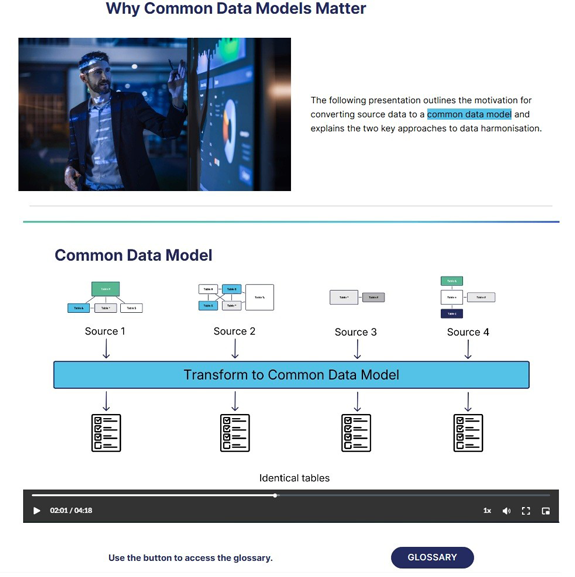 Screenshot Training Modules
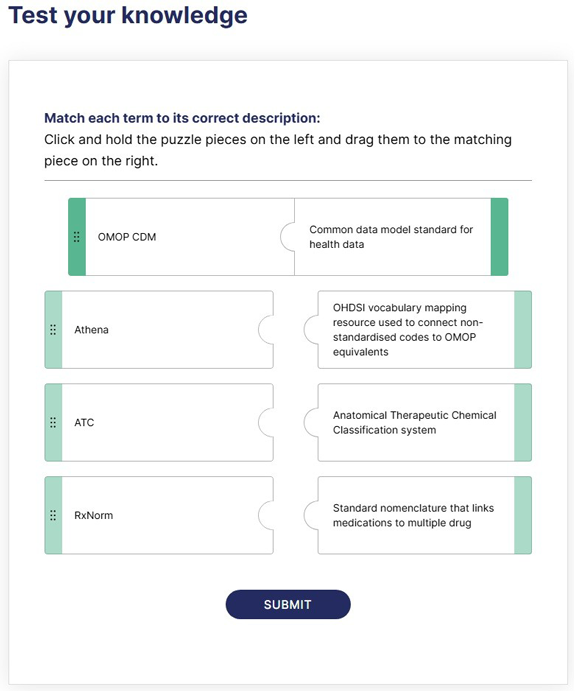 Screenshot Training Modules
 Real4Reg members at 42nd ISPE Annual Meeting. (Photo credits:
Fabian Windfuhr)